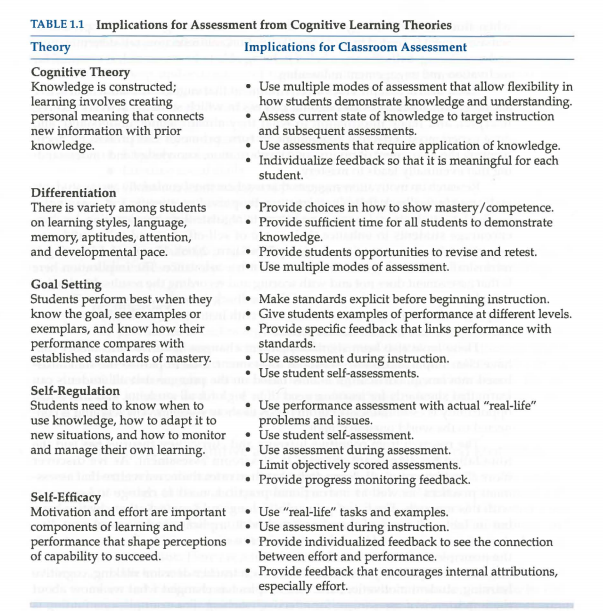
This week, Ashley Pagan and continued our collaborative work to examine how the different curriculum designs impact planning, instruction and assessment approaches at the classroom level. Ashley and I decided to continue to expand our Popplet for this module. One thing that we were conscious of as we expanded the Popplet was working carefully to organize our content so that it did not become visually distracting. To accomplish this goal, we took a lot of time adding more connections to the Popplett and reorganizing the bubbles so that they showed a clear connection from conceptions of curriculum, philosophical foundations, curriculum designs and then to planning, instruction, and assessment. Through our review of the research, we found there was a number of connections and quotes that we wanted to include. However, we worried that if we continued to expand out Popplet that it would become difficult to see the connections. For this reason, Ashley proposed that we create a chart in addi...
Ornstein and Hunkins (2013) explain, “Curriculum results from social activity. It is designed for both present and emerging purposes. Curriculum is a dynamic field” (p.1). By considering the dynamic nature of curriculum one can explain how conceptions of curriculum have evolved and changed over time to reflect and meet the needs of society. Schiro (2013) states, “each of the curriculum ideologies has a history” (p.7). By digging deeper into the historical and social context of conceptions of curriculum one can better explain why some conceptions of curriculum remain applicable to the current educational landscape while others have not. The conceptions of the curriculum which are considered mainstream are ones that have remained relevant and enduring over time. While other conceptions have been modified or removed over time as the social, cultural, or political landscape have changed to such a degree that the conception is no longer viewed as relative in the mainstream in education. V...
Section 1: Choosing a Professional Community When considering a context for professional practices I first started by evaluated an area of need in my professional resources. I currently enjoy utilizing a variety of online professional resources including CultofPedagogy. Last year, I also joined a facebook group Reading and Writing Workshop in International Schools and Units of Study in Middle School: Reading and Writing Workshops TCRWP to support my professional growth in a school that has adopted the Reading and Writing Workshop model from Teachers College at Columbia University. I have found these groups to be a valuable resource to ask questions and obtain resources for Reading and Writing Workshop. When considering my current role and professional communities I wanted to investigate professional resources specifically for teachers working with students with exceptionalities. In my current role, I work as a Student Support Teacher supporting students with ...


Comments
Post a Comment